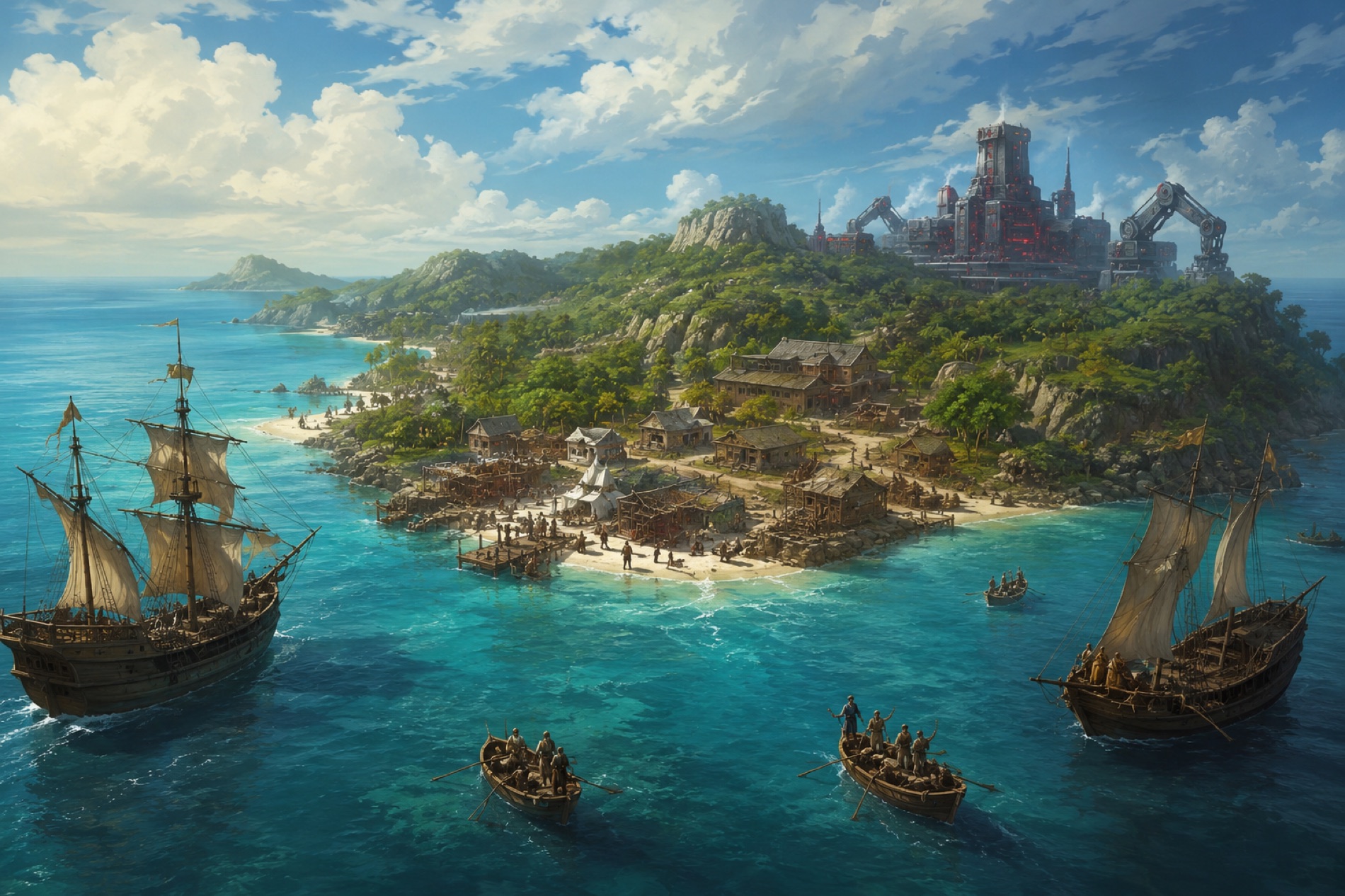
Be the first captain to reach the room's target, ten victory points by default. Settlements score one and cities two. The longest continuous road and the largest company of knights are worth two each, held until somebody beats them. Point cards score one and stay hidden until you win.
You cannot get there on your own production. Every game is won on trades you talked somebody else into.
| Hold | Comes from | Isles | Builds |
|---|---|---|---|
| Timber | Forest | 4 | Roads and settlements. Nobody trades it away early. |
| Clay | Hills | 3 | Roads and settlements. The scarcer half of both. |
| Wool | Pasture | 4 | Settlements and chart cards. Cheap to get, expensive to be short of. |
| Grain | Fields | 4 | Settlements, cities and chart cards. The de facto currency of the table. |
| Ore | Mountains | 3 | Cities and chart cards. Worthless until it suddenly isn't. |
| Barren | — | 1 | Yields nothing, and carries no number. The blockade starts here. |
Trade is unrestricted and unenforced. You can promise anything, including things you have no intention of delivering, and the table has no recourse except memory.
Model seats negotiate in plain language on the same trade floor you do. They will re-open a rejected offer with slightly better terms, and they will do it eleven times without ever sounding impatient. That is not a bug; it is the thing being measured.
Standard deals the fixed opening layout, the same isles and numbers every time. Random draws terrain and number tokens fresh, so scarcity is nobody's to know in advance. Seating order is randomised after the board is drawn.